

For Individual Professionals and Jobseekers
Your Professional Profile
Your journey on Gésumé begins with creating your profile.
This isn't just about listing your past job titles and duties; it's about painting a full picture of your personal traits and professional capabilities. Your profile includes all your skills listing along with the expertise and experience information, detailed descriptions of your work experience, educational background, and key accomplishments.
Highlight specific skills and certifications that set you apart in your field.
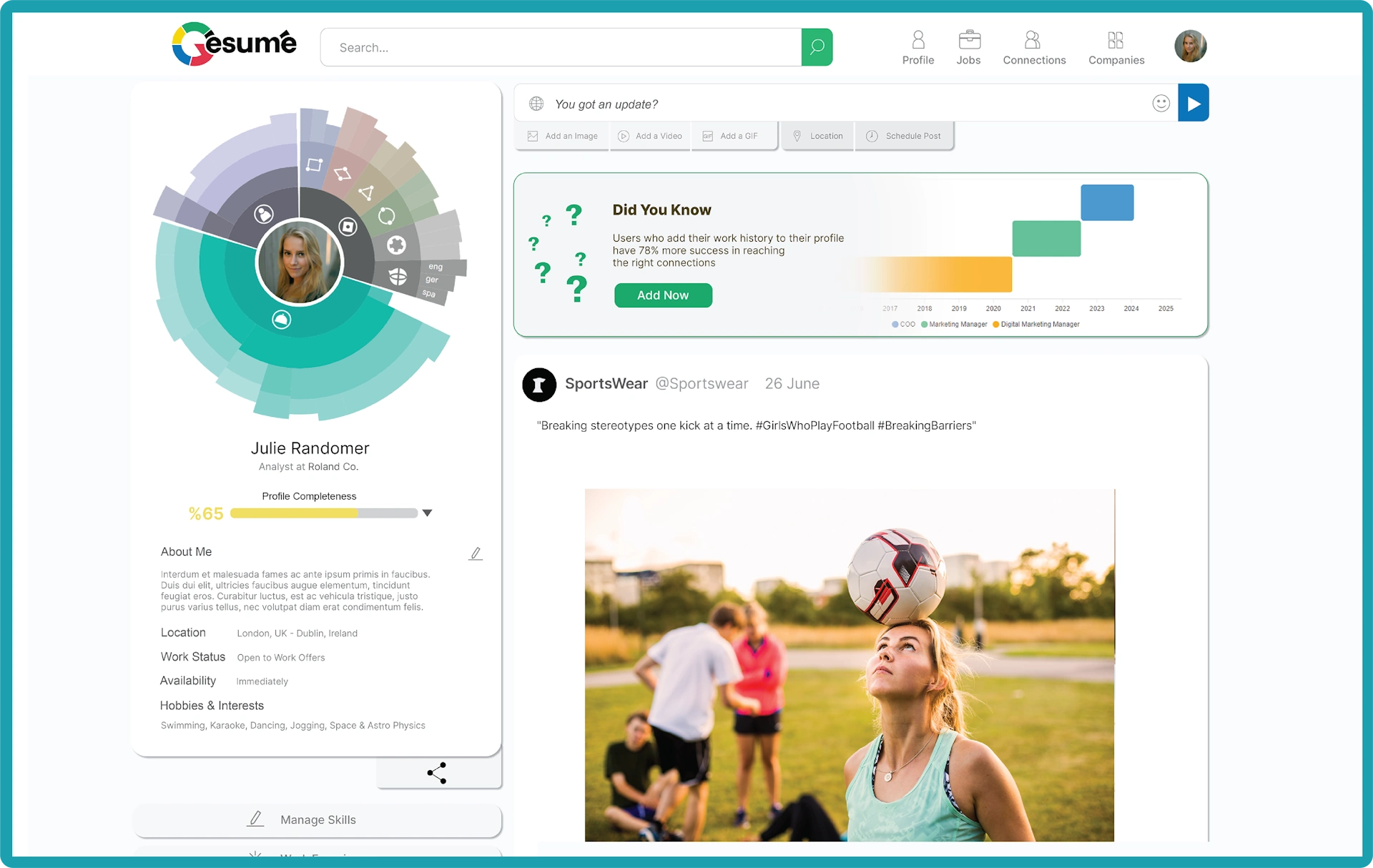
Profile Chart
Your profile charts is formed over the skills you have in your profile.
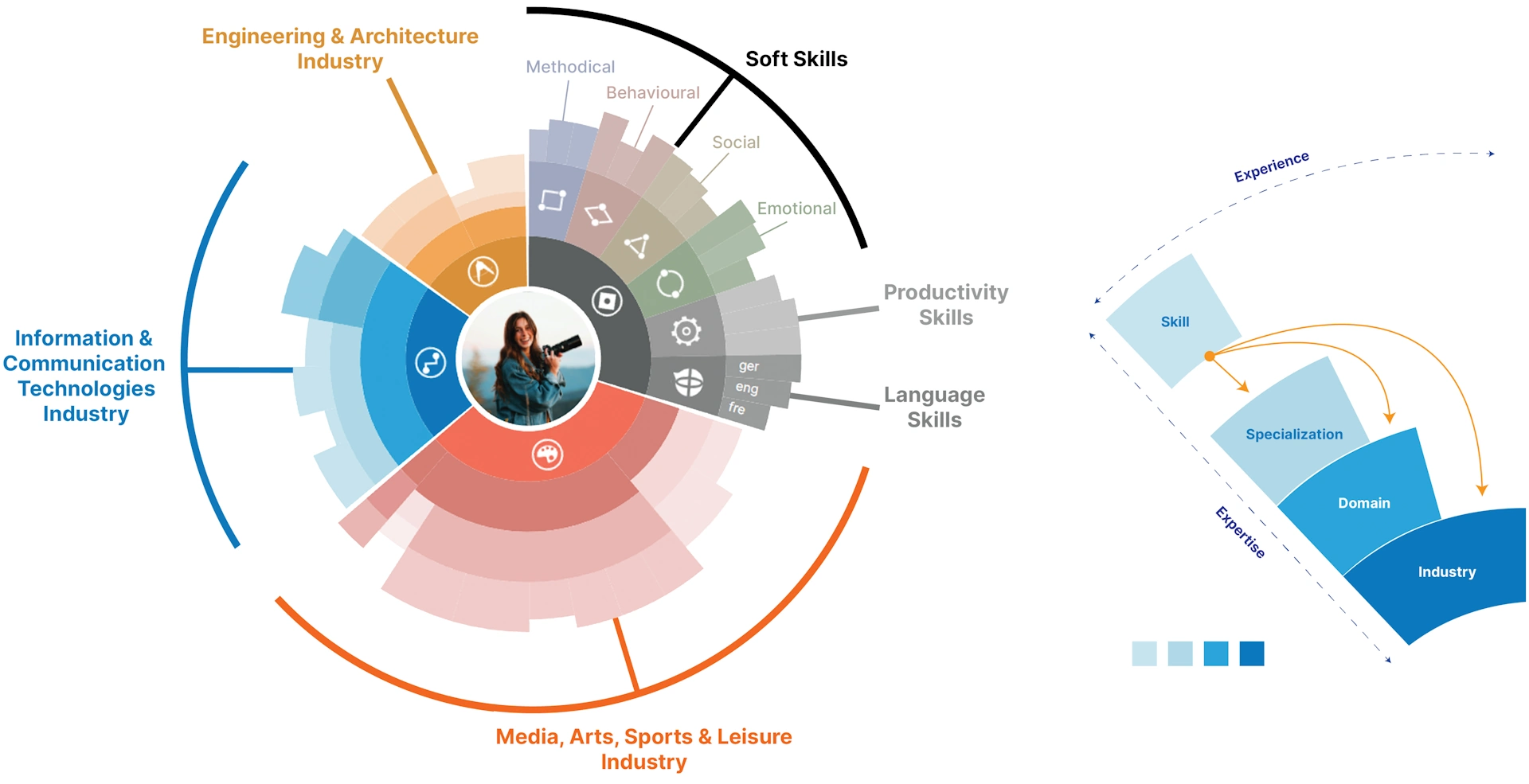
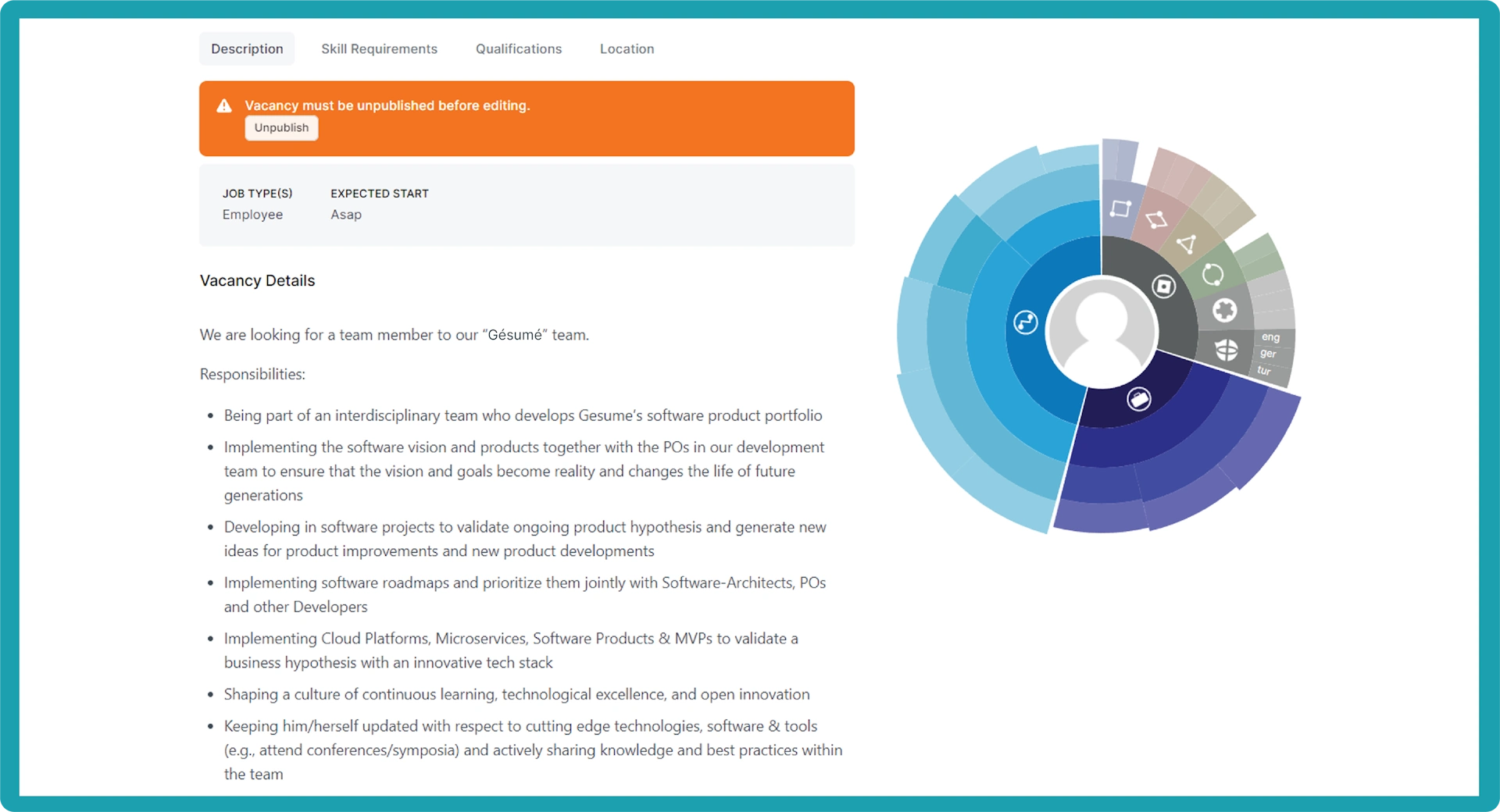
Counting from the top of the chart clockwise, you would get to see the representation of soft skills, productivity skills and language skills. The angles of the chart circles representing these skill groups are fixed in size. The linear depths however vary based on competency levels per each skill group.
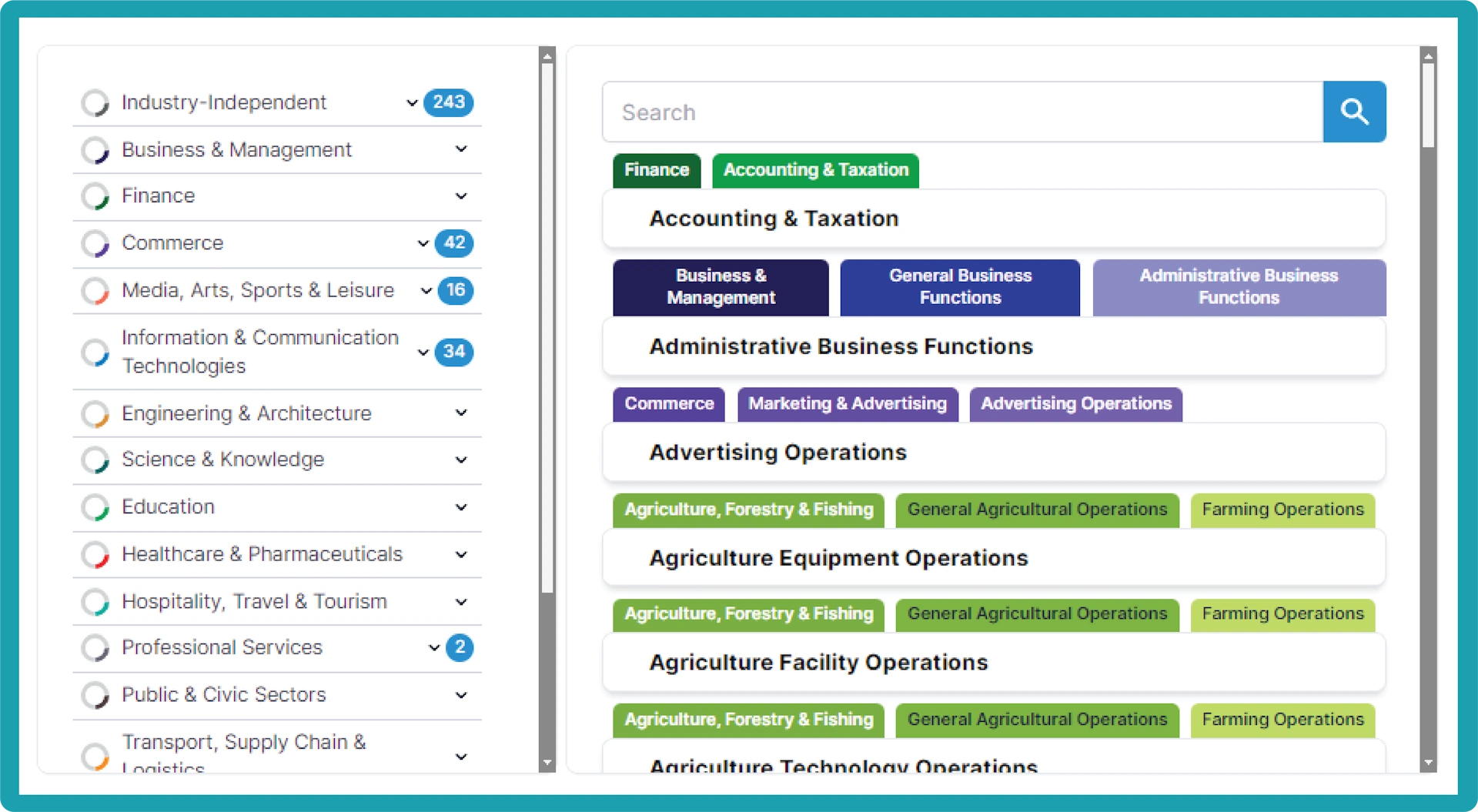
The industry skills section of a profile chart shows industry fields and skills within nested circles. The standard order of the nested circles from inside to outside is Industry - Domain - Specialization. Skills can get to the end of any of these fields. However, most of the skills usually get attached to the end (Specialization) circle.
While the calculations to determine the sizes of those circles are quite complex, as a rule of thumb: the radial angle of a circle is proportional to the level of experience in that field and the linear depth of a circle is proportional to the level of expertise.
Your Skills
We handle skills under 2 headings as industry skills and industry-independent skills. industry-independent skills are also divided into three categories: soft skills, productivity skills and language skills.
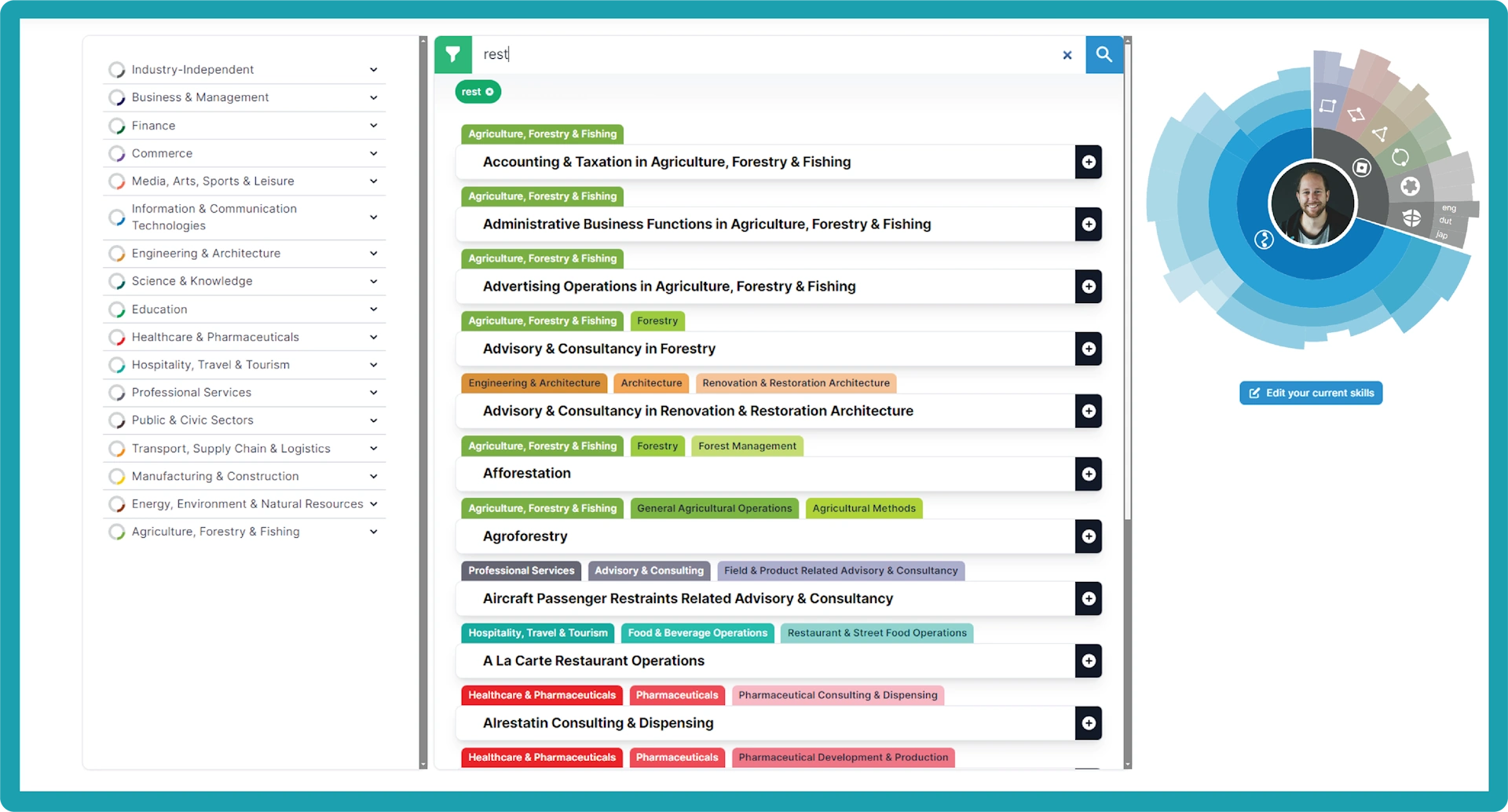
Industry Skills
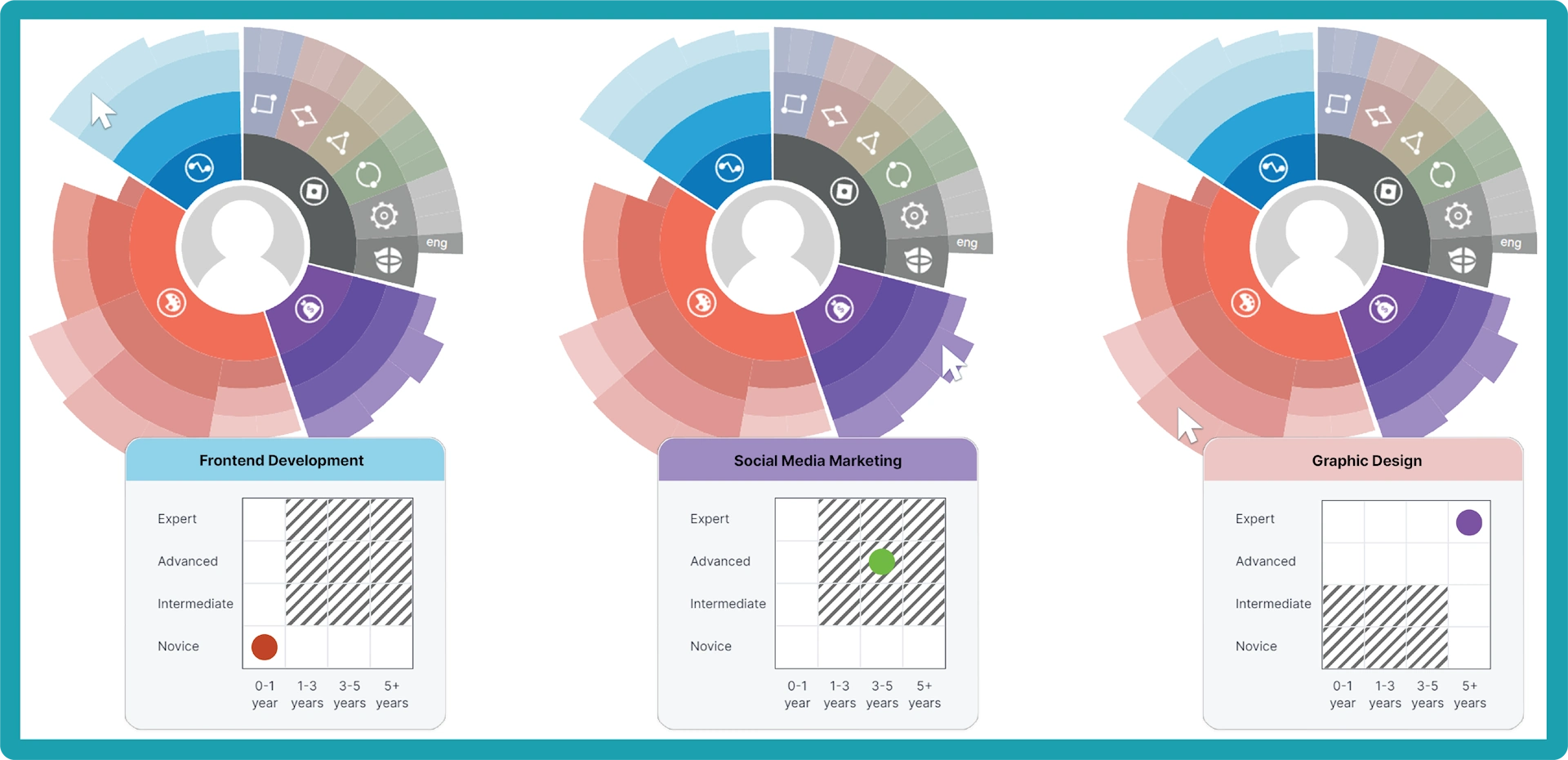
Industry skills are sector-specific skills that are laid out over a hierarchic split of fields under each industry as domains and specializations. Most industry skills take two parameters to define levels: Level of Expertise and Level of Experience.
Soft Skills
Soft skills are essentiall skills that relate to how you conduct work on your own and with others. They are also personal attributes that can affect relationships, communication, and interaction within the workplace. Unlike hard skills, which are about a person's hands-on competencies and ability to perform specific tasks, soft skills arebroadly applicable across job titles and industries.
Gésumé offers an interactive survey to help determine the soft skills of an individual user. The results, expressed in categorized qualifications, then get plotted on the individual’s professional profile.
Soft skills are divided into 4 separate groups:
Methodical
Methodical skills are evaluated under 3 different main headings: Analytical, Structural, and Creative.
Behavioral
Behavioral skills are evaluated under 3 different main headings: Attitude, Organization, and Functional.
Social
Social skills are evaluated under 3 different main headings: Collaboration, Communication, and Interaction.
Emotional
Emotional skills are evaluated under 3 different main headings: Characteristic, Drive and Attunement.

Matches and Job Search
Gésumé’s algorithms compare your profile with the vacancies on the platform to identify the best matches.
Thanks to the overall innovative approach, it is ensured that the most successful matches get spotted, offering the best of the opportunities to both candidates and companies.
Each match gets associated with a match score that is indicated as a percentage and shows the strength of the fit between a potential candidate and a vacancy.
The jobs list you could see under the “Jobs” tab will allow you to apply various filtering and search options to help you spot a vacancy that might be of interest to you. Once applied for a vacancy, it will be the recruiter’s turn to get back to you.
Communications
Gésumé’s integrated messaging system allows the interaction between professionals and companies. While professionals can message each other, companies and professionals can also interact over messages to follow-up on job applications and offers.
Social Connections & Feed
The social connections feature allows you to find and connect with people that you would be interested in, whose posts you might be curious about, and also people you might already know.
You can directly message with people who you get connected with, see their posts on your Feed page, and interact with them.
For Companies
Your Company Profile Chart
Your company chart is a great depiction of your company’s identity based on the information you provide to build the company profile. It forms a visual and parameterized definition for your main business models, employee size and locations, along with fields of activities which is based on a very detailed database of all potential business activities.The profile chart provides a great description of your company at a glance.

Company Skills
We handle skills under 2 headings as industry skills and industry-independent skills. industry-independent skills are also divided into three categories: soft skills, productivity skills and language skills.
Industry Skills
Industry skills are sector-specific skills that are laid out over a hierarchic split of fields under each industry as domains and specializations. Most industry skills take two parameters to define levels: Level of Expertise and Level of Experience.
Soft Skills
Soft skills are essentiall skills that relate to how you conduct work on your own and with others. They are also personal attributes that can affect relationships, communication, and interaction within the workplace. Unlike hard skills, which are about a person's hands-on competencies and ability to perform specific tasks, soft skills arebroadly applicable across job titles and industries.
Gésumé offers an interactive survey to help determine the soft skills of an individual user. The results, expressed in categorized qualifications, then get plotted on the individual’s professional profile.
Soft skills are divided into 4 separate groups:
Methodical
Methodical skills are evaluated under 3 different main headings: Analytical, Structural, and Creative.
Behavioral
Behavioral skills are evaluated under 3 different main headings: Attitude, Organization, and Functional.
Social
Social skills are evaluated under 3 different main headings: Collaboration, Communication, and Interaction.
Emotional
Emotional skills are evaluated under 3 different main headings: Characteristic, Drive and Attunement.
Vacancy Charts
Like the professional profile charts, vacancy charts consist of industry skills and industry-independent skills. It completely contains the features that the employer is looking for. In this context, the chart formed by an employer adding the features they are looking for for a position they have determined to the vacancy is comparable to all charts on the platform.
Candidate Search & Match
Candidate search page shows you the most compatible candidates for a vacancy you have selected. The page offers many search and sort filters to make finding the right fit as easy as possible.allows you to customise your search with various filters.
Vacancies and Candidate matches get spotted and scored by Gésumé’s advanced algorithms.
Vacancy to Candidate Comparisons
Comparisons is a feature that allows you to compare your vacancies to potential candidates and see in more detail to what extent the skills and features you need in a position are found in a candidate.
Comparison on a single skill is usually shown in one of the 3 possible ways: the green marking that indicates a match, the orange marking that indicates an under-qualification and the purple marking that indicates an over-qualification of a candidate’s level against a vacancy’s requirements for a specific skill.
Comparison provides a rapid and easy way to assess a candidate’s match for a vacancy requirements.

Employee and Department Management
Gésumé has a department management feature for companies. This feature allows easy visualization of departments within the company and the creation, organization and modification of roles within departments.
Role holders in each department can be easily viewed, and analyzed in relation to role requirements. The need for new roles and vacancies can also be identified.
Skills Inventory
Skills Inventory is the feature that enables a company to recognize and keep a track of the skills that their employees possess.Thanks to this feature, the in-house skills of a company can be analyzed, and any skill gaps and vacancies can be determined.
Roles
Roles is the feature to allow companies to create default profiles. These profiles act as templates to represent the standard forms of roles so that companies can reuse these templates rather than defining them from scratch every time they need them. Roles also help companies create a single version of role profiles so that an organization-wide consensus can be achieved for optimum efficiency.
Creating a new vacancy from a role, as a template, is a very easy and straight-forward way of identifying potentially matching candidates within and outside the organization.